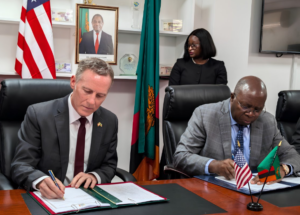
Maputo, Mozambique (Running Africa) — Russia has pledged to strengthen security cooperation with Mozambique as the southern African nation continues its fight against the Islamist insurgency in Cabo Delgado Province, where years of violence have displaced hundreds of thousands of people and threatened major energy investments.
During an official visit to Maputo, Russian Foreign Minister Sergey Lavrov reaffirmed Moscow’s support for the government of President Daniel Chapo, pledging continued cooperation to help restore peace and stability in the conflict-affected region.
The insurgency, which began in 2017 and has been linked to the Islamic State group, has claimed thousands of lives while forcing large-scale displacement across northern Mozambique. Armed militants have repeatedly attacked civilians, security forces and local communities, severely disrupting economic activity and humanitarian operations.
Cabo Delgado is home to some of Africa’s largest offshore natural gas reserves, making the province strategically important for Mozambique’s economy and international energy markets. The prolonged conflict has delayed several multibillion-dollar liquefied natural gas (LNG) projects and raised concerns among foreign investors.
Since 2021, Rwandan security forces, supported financially by the European Union, have played a key role in assisting Mozambican troops in counterinsurgency operations. Their deployment has helped improve security in several districts, allowing some displaced residents to return home and enabling economic activity to gradually resume.
Despite these gains, security experts and humanitarian organizations warn that insurgent groups remain active in parts of Cabo Delgado, continuing to pose a significant threat to civilians and regional stability.
Lavrov’s visit forms part of Russia’s broader diplomatic tour of Africa, aimed at deepening strategic partnerships in areas including security, defense, trade and political cooperation.
The renewed commitment underscores Moscow’s growing engagement on the continent as African governments increasingly seek international partnerships to address complex security challenges while protecting critical infrastructure and promoting long-term stability.