President Abdelmadjid Tebboune has ordered legal changes targeting people convicted of intentionally starting forest fires after deadly blazes swept through the country’s northeast.
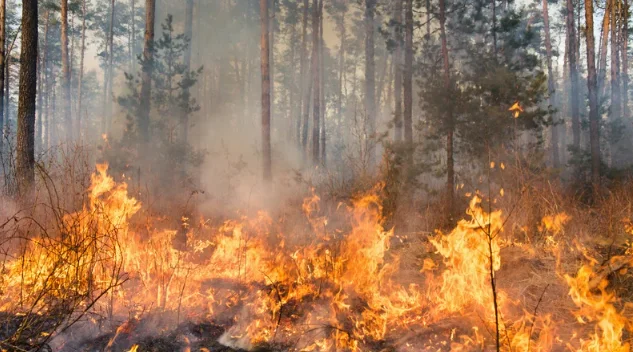
Algiers, Algeria (Running Africa) — Algeria is moving to introduce the death penalty for people convicted of deliberately setting forest fires, following a wave of deadly wildfires that killed at least 12 people and injured 54 others across several provinces.
President Abdelmadjid Tebboune has directed the justice minister to submit proposed amendments to Algeria’s penal code by September 15, as authorities investigate whether some of the recent fires were intentionally started.
According to state television, any death sentence imposed under the proposed measures would only be carried out after the convicted person had exhausted all available avenues of appeal.
The move follows a major wildfire emergency that affected provinces including Jijel, Béjaïa, and Tizi Ouzou, with authorities recording 193 fires nationwide during a 24-hour period.
Algeria Proposes Death Penalty for Deliberate Forest Fires
Tebboune’s directive could significantly increase the punishment for intentional forest arson if the proposed amendments are approved.
Under Algeria’s existing laws, deliberately starting a forest fire can carry a prison sentence of up to 30 years, while life imprisonment is possible in certain circumstances.
The proposed changes would allow capital punishment in cases that meet the legal threshold established by the amended penal code.
Algeria already retains the death penalty for several offenses, but the country has maintained a longstanding de facto moratorium on executions.
The last known execution in Algeria was carried out in 1993.
Authorities Investigate Whether Algeria’s Wildfires Were Deliberately Started
The government is investigating the origins of the latest fires amid suspicions that some may have been deliberately ignited.
Tebboune cited footage that appeared to show several fires starting at roughly the same time as one reason for further investigation.
He instructed provincial authorities to provide relevant information to security services as investigators work to establish whether criminal activity contributed to the outbreak of the fires.
Authorities have not publicly established that all, or even most, of the recent wildfires were deliberately started.
The investigation is therefore expected to focus on individual incidents and available evidence before responsibility can be determined.
Algeria Wildfires Kill 12 and Injure 54
The latest wildfire crisis has killed at least 12 people and injured 54 others, according to authorities.
Among the areas affected were Jijel, Béjaïa, and Tizi Ouzou, regions that have experienced severe wildfire threats during previous periods of extreme heat and dryness.
At the height of the latest emergency, Algerian authorities recorded 193 fires across the country within 24 hours.
At one stage, 46 fires remained active as emergency crews worked to contain the blazes and protect affected communities.
The scale of the outbreaks placed significant pressure on firefighting and emergency services.
Algeria Has Not Carried Out an Execution Since 1993
Although capital punishment remains part of Algerian law, the country has not carried out an execution for more than three decades.
Death sentences can still be handed down by courts for certain serious crimes, but executions have not been implemented since 1993.
The latest proposal, therefore, does not constitute the reintroduction of capital punishment into Algeria’s criminal code. Instead, it would expand its potential application to people convicted of deliberately starting forest fires under circumstances that the proposed legislation would cover.
State television reported that any execution under the planned provisions would only take place after all legal avenues of appeal had been exhausted.
Tebboune Orders Compensation and Repairs After Wildfires
Alongside the proposed legal changes, Tebboune has ordered measures to help communities recover from the destruction.
The president directed authorities to provide compensation to affected families, restore essential services, and accelerate repairs to homes damaged by the fires.
Recovery efforts are expected to continue in the worst-affected provinces as officials assess losses to homes, infrastructure, forests, and local livelihoods.
The government will also face pressure to strengthen wildfire prevention and emergency preparedness as Algeria continues to experience recurring fire seasons.
Deadly Wildfires Renew Focus on Forest Protection in Algeria
The latest disaster has again highlighted the threat wildfires pose to communities and ecosystems across northern Algeria.
Large forest fires have repeatedly affected the country during periods of extreme heat, with mountainous and heavily forested regions particularly vulnerable.
The government’s proposed tougher punishment for intentional arson signals an effort to address the potential criminal causes of some fires, while investigations continue into the origins of the latest outbreaks.
With 12 people dead, 54 injured, and 193 fires recorded within 24 hours, Algeria now faces both an extensive recovery operation and a potentially significant change to its criminal law.
The proposed penal code amendments expected by September 15 will determine how the government intends to apply the death penalty to deliberate forest arson, while Algeria’s more than three-decade moratorium on executions remains an important part of the wider legal debate.