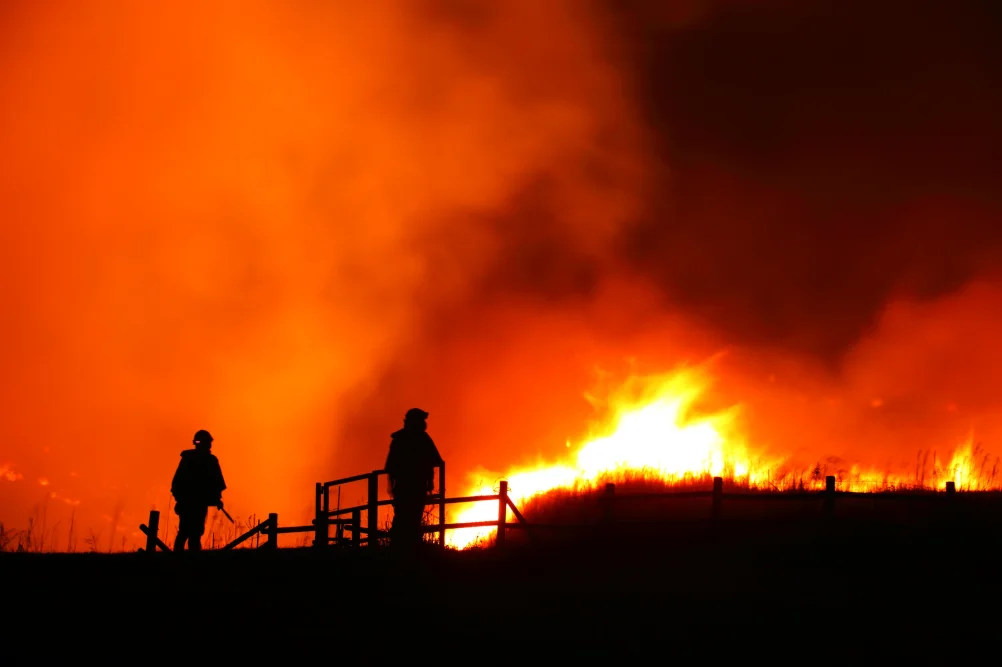
Algiers, Algeria (Running Africa) — At least 12 people have been killed and more than 50 injured as wildfires spread across northern Algeria, with an intense heatwave fueling dozens of blazes and forcing residents to evacuate threatened communities.
Authorities reported deaths in the provinces of Jijel, Bejaia and Tizi Ouzou, among the areas hardest hit by the latest fires along Algeria’s northern coastline.
At least six people suffering from serious burns remain in intensive care, while firefighters continue efforts to contain outbreaks that at one point numbered 69 active fires.
The latest emergency comes during an increasingly destructive wildfire season in Algeria, where more than 2,000 fires were recorded in July alone.
Algeria Wildfires Leave 12 Dead and More Than 50 Injured
The latest wildfires have caused fatalities across several northern provinces as emergency services battle to contain the flames.
At least 12 people have died and more than 50 have been injured, according to Algerian authorities.
Six burn victims remain in intensive care, raising concerns that the human toll could worsen.
Jijel, Bejaia and Tizi Ouzou have all reported deaths as fires spread through areas exposed to extreme summer temperatures.
69 Fires Reported Across Northern Algeria
Firefighters have been confronting dozens of simultaneous blazes across the country’s northern regions.
At one stage, authorities recorded 69 active wildfires, stretching emergency resources as crews attempted to prevent flames from reaching populated areas.
The scale of the outbreak has required firefighting teams to respond across multiple provinces at the same time.
Hot and dry conditions have made containment more difficult, with the intense heat creating an environment in which fires can spread rapidly through vegetation.
Residents Evacuated in Bejaia and Jijel
The fires have forced evacuations in some of the worst-affected communities, particularly in Bejaia and Jijel.
Thick smoke and advancing flames threatened residential areas, prompting authorities to move residents away from locations considered at immediate risk.
Emergency teams have focused on protecting homes while continuing efforts to bring the fires under control.
Smoke from large wildfires can also create significant health risks beyond areas directly threatened by flames, particularly for children, elderly residents and people with respiratory conditions.
Algerian Ministers Visit Wildfire-Hit Regions
Senior government officials have travelled to affected areas as Algeria intensifies its emergency response.
Interior Minister Said Sayoud and Health Minister Mohamed Seddik Ait Messaoudene visited impacted regions to oversee firefighting, rescue and medical operations.
Health authorities are treating dozens of injured people while hospitals care for those suffering severe burns.
The government is also coordinating evacuation and emergency support for communities affected by the fires.
Algeria Records More Than 2,000 Wildfires in July
The latest outbreak follows an already severe period of wildfire activity.
More than 2,000 fires were recorded across Algeria in July, with several fatalities reported during the month.
Algeria has experienced repeated deadly wildfire seasons in recent years, particularly across the forested northern regions bordering the Mediterranean.
The recurring disasters have increased pressure on authorities to strengthen prevention, early-warning systems and firefighting capacity.
Heatwave and Climate Change Increase North Africa Wildfire Risk
The latest fires are unfolding amid an intense heatwave across Algeria, with extreme temperatures contributing to conditions favorable for wildfires.
North Africa has experienced increasingly severe periods of heat and drought, creating greater pressure on forests, water resources and communities.
Scientists have warned that climate change increases the likelihood and severity of extreme heat, which can dry vegetation and create conditions that allow wildfires to spread more rapidly.
While individual fires can have several immediate causes, hotter and drier conditions can significantly increase their destructive potential.
With at least 12 people dead, more than 50 injured and communities evacuated, Algeria is again confronting the human cost of increasingly severe wildfire seasons.
As firefighters continue battling blazes across the north, the immediate priority remains containing the fires and protecting communities, while the longer-term challenge is preparing for extreme heat and wildfire risks that are becoming increasingly difficult to ignore.