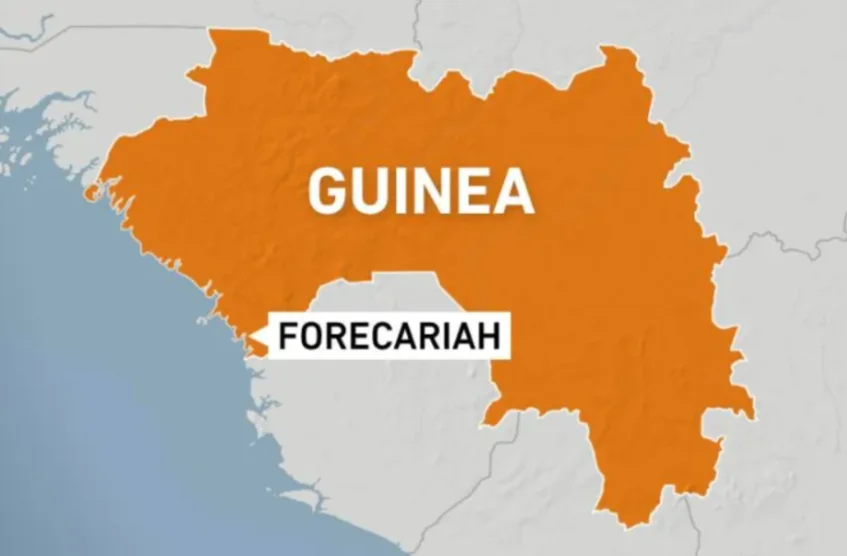
Forecariah, Guinea — The discovery of six bound and blindfolded bodies in a mass grave in southwestern Guinea has triggered urgent demands for an independent investigation, reviving fears over a pattern of enforced disappearances under the country’s military-led government.
Local firewood collectors stumbled upon the grave near Alassoya village, in the Forecariah prefecture of Lower Guinea, on August 24. The six unidentified male victims had been bound and blindfolded before burial, according to accounts from the site — details that have fueled suspicions of extrajudicial killing rather than accidental death.
Civil Society Demands Transparency
Twenty African civil society organizations, including the Senegal-based Afrikajom Centre and national chapters of Tournons La Page (TLP), issued a joint statement calling for an independent, impartial, and transparent investigation. The groups are urging Guinean authorities to bring in national and international forensic experts to help identify the victims and determine the cause of death.
Part of a Wider Pattern, Groups Say
The organizations say the Alassoya grave is not an isolated incident. They point to at least 35 documented cases of enforced disappearance attributed to Guinean security forces since September 2021, when the current military government took power. Rights groups warn the latest find reinforces concerns that extrajudicial or arbitrary executions may be occurring largely outside public scrutiny.
Military Confirms Discovery, Promises Findings
Guinea’s Armed Forces have confirmed the discovery of the bodies, stating they were transferred to a hospital in Forecariah for identification. Military officials have pledged to make the results of their investigation public, though rights groups note that similar promises after past incidents have not always been fulfilled.
A Crackdown Backdrop and International Pressure Mounts
The grave’s discovery lands amid an intensifying crackdown on dissent since General Mamady Doumbouya seized power in a 2021 coup. Guinea’s transitional authorities have suspended political parties, restricted protests, and pursued arrests, prosecutions, and exile against opposition figures and civil society leaders — a climate critics say has deepened impunity around disappearances.
France has joined the calls for accountability, urging Guinean authorities to conduct a transparent and independent probe into the deaths, adding diplomatic weight to the demands from local and regional rights groups.
Not the First Such Discovery
This is not the first mass grave reported in the region. A similar discovery was made in the same area last year, and those victims remain unidentified, with the cause of death still undetermined, a precedent that has heightened skepticism about whether this latest case will be resolved.
As pressure builds from both domestic civil society and foreign governments, the coming weeks will test whether Guinea’s military government follows through on its pledge of transparency, or whether the Alassoya grave becomes another unresolved chapter in the country’s growing list of unexplained disappearances.