The incumbent secured 55.94 percent of the vote, comfortably surpassing the threshold required to avoid a presidential runoff.
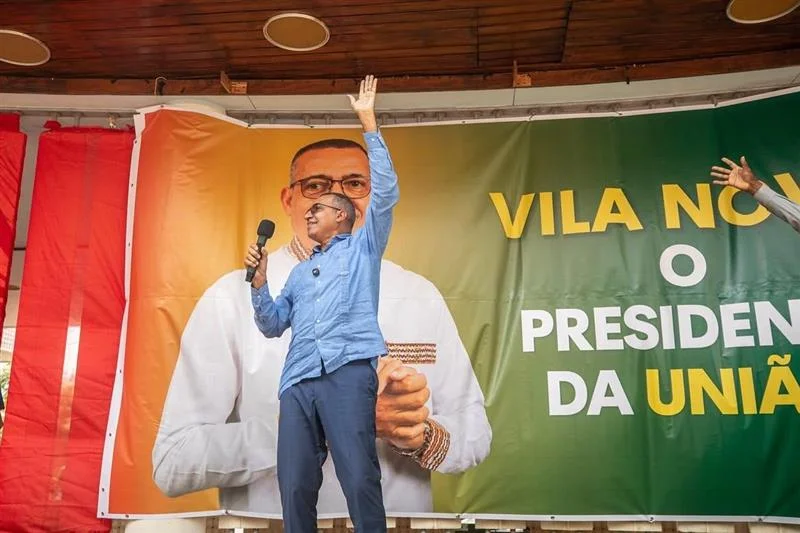
São Tomé, São Tomé and Príncipe (Running Africa) — President Carlos Manuel Vila Nova has secured a second five-year term after winning 55.94% of the vote in São Tomé and Príncipe’s presidential election, according to preliminary results released by the National Electoral Commission.
The outcome gives Vila Nova an outright first-round victory, surpassing the absolute majority threshold required under the country’s electoral laws and eliminating the need for a runoff.
First-Round Win Secures New Five-Year Mandate
The preliminary results were announced on Monday following nationwide voting across the island nation in the Gulf of Guinea.
Vila Nova faced competition from four presidential candidates after a fifth contender withdrew before election day. Among his challengers was Nito Viegas d’Abreu, a sitting member of the National Assembly.
More than 140,000 registered voters were eligible to cast ballots in the election.
Continuity in Leadership
Vila Nova was first elected president in 2021, when he won a second-round runoff to become head of state.
Under the Constitution of São Tomé and Príncipe, the president serves as head of state and commander-in-chief of the armed forces, playing a central role in national governance and constitutional oversight.
His re-election provides political continuity as the Central African island nation seeks to maintain stability while advancing economic development and democratic governance.
Attention Turns to Parliamentary Elections
With the presidential election concluded, political focus is expected to shift to the National Assembly elections scheduled for September, which will determine the composition of parliament and influence the government’s legislative agenda over the next term.
The parliamentary vote is widely expected to shape the country’s political direction, including future policy priorities, economic reforms, and cooperation between the presidency and the legislature.
As one of Africa’s smallest nations, São Tomé and Príncipe continues to be recognized for its relatively stable democratic institutions, with observers closely watching the upcoming parliamentary elections as the next key milestone in the country’s political calendar.