The Malian music legend says he cannot perform while fellow Africans face attacks and intimidation in the country.
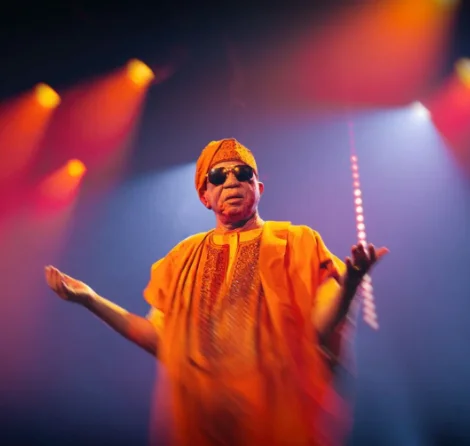
Bloemfontein, South Africa (Running Africa) — Malian music legend Salif Keïta has withdrawn from planned performances in South Africa, citing concerns over renewed xenophobic violence and hostility targeting African migrants.
The 77-year-old singer had been scheduled to perform at the Macufe festival in the Free State, but said reports of attacks and growing hostility toward foreign nationals made it impossible for him to proceed with the appearance.
Keïta stressed that his decision was not directed against South Africans but against hatred, xenophobia, and violence, adding his influential voice to growing concern over the treatment of African migrants in the country.
The Free State government expressed disappointment over the withdrawal, saying Macufe was intended to celebrate African culture and promote unity across the continent.
Salif Keïta Withdraws From Macufe Festival in South Africa
Keïta’s decision removes one of African music’s most celebrated figures from the Macufe lineup.
The Malian musician cited the current environment surrounding foreign nationals in South Africa as the reason for withdrawing.
His decision comes amid renewed public debate over migration and reports of hostility toward migrants from other African countries.
Keïta made clear that his position should not be interpreted as opposition to South Africa or its people, instead framing his withdrawal as a stand against violence and discrimination.
Malian Singer Cites Xenophobia and Migrant Safety Concerns
The withdrawal places renewed attention on xenophobia in South Africa, an issue that has periodically triggered diplomatic and social tensions between the country and other African nations.
Anti-migrant demonstrations have intensified in recent months amid public concern over undocumented immigration, employment, and access to public services.
South Africa’s government says it is taking steps to address illegal immigration through established legal processes.
At the same time, authorities have acted against individuals accused of targeting foreign nationals or attempting to enforce immigration rules themselves.
The government faces the challenge of addressing legitimate immigration concerns while preventing those tensions from developing into discrimination or violence against migrants.
Free State Government Disappointed by Salif Keïta Withdrawal
The Free State government expressed disappointment over Keïta’s decision to pull out of Macufe.
Officials emphasized that the festival was designed to celebrate African arts and culture while promoting cooperation and unity.
Keïta’s withdrawal is therefore particularly significant for an event built around cultural exchange and continental identity.
It also demonstrates how concerns over xenophobia can extend beyond domestic politics and affect South Africa’s cultural relationships with other African countries.
South Africa Faces Renewed Debate Over African Migrants
Migration remains a politically and socially sensitive issue in South Africa.
The country attracts migrants from across the continent seeking employment, education, security, and economic opportunities.
Periods of economic difficulty and high unemployment have sometimes coincided with increased hostility toward foreign nationals, particularly migrants from other African countries.
South African authorities have repeatedly faced pressure to strengthen immigration enforcement while also protecting migrants from unlawful discrimination and violence.
Keïta’s withdrawal brings additional international attention to that balancing act.
‘Golden Voice of Africa’ Adds Weight to Xenophobia Debate
Known internationally as the “Golden Voice of Africa,” Salif Keïta is one of Mali’s most influential musicians and one of the continent’s most recognizable cultural figures.
Over a career spanning several decades, he has helped take Malian music to international audiences while becoming an important figure in African popular culture.
His decision to withdraw from a major South African cultural event, therefore, carries significance beyond the cancellation of a single performance.
By explicitly linking his decision to concerns about xenophobia and violence, Keïta has brought another prominent African voice into the debate over the treatment of migrants in South Africa.
Macufe Withdrawal Highlights Wider African Concerns
Keïta’s withdrawal presents an uncomfortable challenge for a festival intended to showcase African cultural unity.
While South Africa continues to grapple with undocumented migration and the political pressures surrounding it, concerns over attacks and hostility toward African migrants risk damaging relationships beyond the country’s borders.
For Keïta, the message behind his decision is clear: his objection is to hatred and violence rather than South Africans themselves.
As one of Africa’s most respected musicians steps away from Macufe, the controversy underscores how South Africa’s migration debate is increasingly resonating across the continent — not only politically, but culturally as well.