The departure of the federation’s president, general secretary, and executive committee comes after mounting pressure over the state of Nigerian football.
Abuja, Nigeria (Running Africa) — Nigeria’s football administration has been plunged into a major leadership crisis after Nigeria Football Federation President Ibrahim Gusau, General Secretary Mohammed Sanusi, and the entire NFF executive committee resigned, just weeks before scheduled federation elections.
The mass resignation comes amid mounting scrutiny of the Nigeria Football Federation (NFF) following disappointing performances by the country’s senior national teams and concerns over the administration of Nigerian football.
The Super Eagles have missed two consecutive FIFA World Cups, while the Super Falcons failed to qualify for the 2027 FIFA Women’s World Cup, marking Nigeria’s first absence from the women’s global tournament.
Pressure has also intensified following a fact-finding report that raised concerns over alleged interference in player selection and the management of funds allocated to Nigeria’s national teams.
An emergency congress is now expected to consider the leadership crisis and determine the federation’s next steps.
NFF President Ibrahim Gusau Resigns Alongside Executive Committee
Gusau’s resignation, together with those of Sanusi and the executive committee, represents a significant shake-up at the top of Nigerian football.
The timing is particularly important because the departures come only weeks before the scheduled NFF elections, raising questions about how the federation will manage the transition.
An emergency congress is expected to address the situation and establish a process to determine the NFF’s immediate leadership and administrative direction.
The departures come after sustained criticism from supporters and other stakeholders demanding greater accountability and improved results from the country’s football authorities.
Super Eagles Miss Two Consecutive FIFA World Cups
Nigeria’s struggles on the pitch have contributed significantly to the pressure facing the federation.
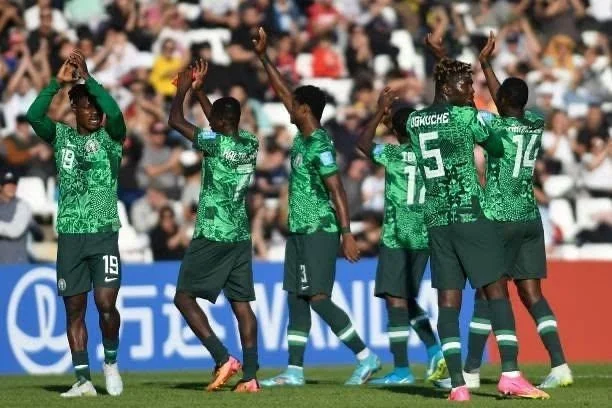
The Super Eagles have failed to qualify for two consecutive FIFA World Cups, a major setback for a country historically regarded as one of Africa’s leading football nations.
Nigeria has produced generations of internationally recognized players and has traditionally been a regular presence at football’s biggest tournament.
Missing consecutive World Cups has therefore intensified questions about planning, coaching decisions, player development, and the wider management of the national team.
Super Falcons Miss 2027 Women’s World Cup
The crisis has also extended to the women’s national team.
The Super Falcons failed to qualify for the 2027 FIFA Women’s World Cup, marking the first time Nigeria has missed the competition.
Nigeria had previously appeared at every edition of the Women’s World Cup, making the failure to qualify a historic setback for the nine-time African champions.
The result added to concerns that problems within Nigerian football extend beyond the Super Eagles and require broader institutional reforms.
NFF Faces Questions Over Player Selection and Football Funds
Administrative concerns have further increased pressure on the federation.
A fact-finding report raised questions about alleged interference in the selection of national team players and the management of funds allocated to Nigeria’s football programs.
Questions have also been raised over billions of naira reportedly spent on football activities, increasing demands for greater transparency over how federation resources are managed.
Any allegations involving financial management or improper interference would require an appropriate investigation before responsibility can be established.
However, the concerns have contributed to a wider loss of confidence in the administration of Nigerian football.
Emergency NFF Congress Expected After Mass Resignation
Attention will now turn to the expected emergency congress and how the federation manages the leadership vacuum.
The Congress could play a critical role in determining interim arrangements and clarifying whether the scheduled NFF elections will proceed as planned.
Ensuring continuity will be particularly important because Nigeria’s national teams and domestic football programs require ongoing administrative and financial management regardless of changes in the federation’s leadership.
The situation could also attract wider scrutiny over whether structural reforms should accompany the leadership transition.
Calls Grow for Reform of Nigerian Football
For critics of the federation, replacing senior officials alone will not resolve the problems facing Nigerian football.
Calls for reform have increasingly focused on governance, financial accountability, grassroots development, coaching structures, national team management and transparency in decision-making.
Nigeria remains one of Africa’s largest reservoirs of football talent, with players competing at leading clubs around the world.
The challenge has been converting that talent into consistent results at the national-team level while building institutions capable of maintaining public confidence.
NFF Leadership Crisis Opens Critical Period for Nigerian Football
The resignations of Ibrahim Gusau and Mohammed Sanusi, and of the entire NFF executive committee, represent one of the most significant leadership changes in Nigerian football in recent years.
But the departures come against a difficult backdrop: two consecutive missed men’s World Cups, the Super Falcons’ failure to reach the 2027 Women’s World Cup, and mounting questions over governance and financial management.
The coming emergency congress and NFF elections could determine who takes control of the federation.
The bigger challenge, however, will be whether the leadership transition produces meaningful reforms capable of rebuilding confidence and returning Nigerian football to sustained success on the African and global stage.