Conakry, Guinea (Running Africa) — At least 31 people have been killed and 22 others injured after a landfill collapsed onto homes in Conakry, following heavy overnight rainfall in the Guinean capital.
The disaster occurred at around 2:00am local time in the Dar-es-Salam area, where a large mound of rubbish gave way and buried nearby homes as residents slept.
Six of the injured are reported to be in serious condition, while authorities fear the death toll could rise as emergency teams continue searching through the debris for survivors and victims.
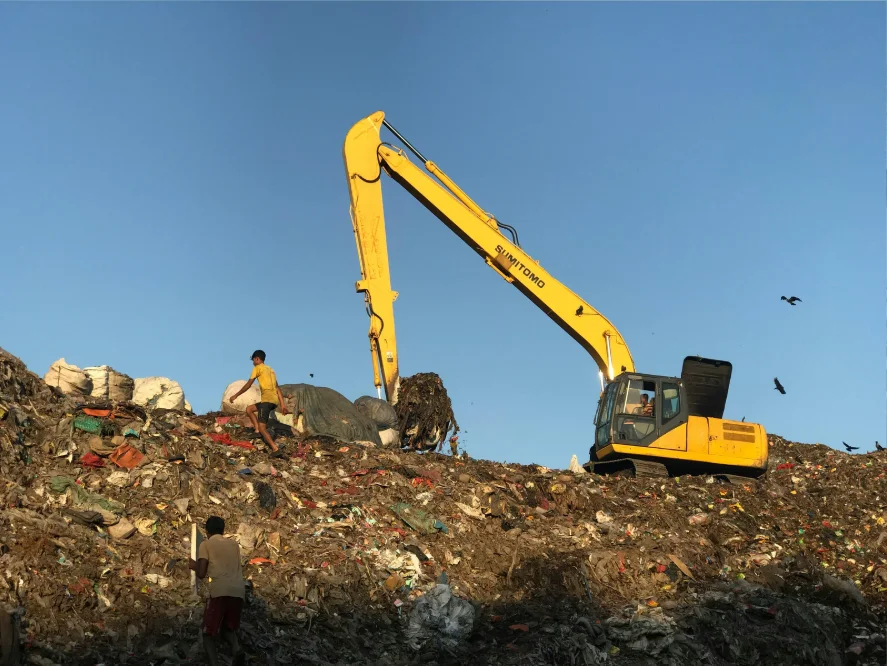
Military personnel have joined rescue operations, with excavators deployed to remove tons of waste and reach people believed to be trapped beneath the collapsed landfill.
Conakry Landfill Collapse Kills 31 After Heavy Rain
The collapse followed intense overnight rainfall that authorities believe destabilized part of the landfill.
A large section of accumulated waste then gave way, crashing into homes built close to the site.
The early-morning timing of the disaster increased the danger, with many residents likely inside their homes when the collapse occurred.
Emergency services reported 31 confirmed deaths and 22 injuries, including six people who were seriously hurt.
Search operations remain underway, and officials have warned that the number of casualties could increase.
Military Joins Search for Survivors in Dar-es-Salam
Guinean authorities deployed emergency teams and military personnel to the Dar-es-Salam neighborhood following the disaster.
Heavy machinery, including excavators, has been brought in to clear the enormous volume of rubbish covering homes and surrounding areas.
Rescuers are continuing to search for people who may remain trapped beneath the waste.
Operations are particularly difficult because moving unstable piles of rubbish can create additional risks for both survivors and rescue personnel.
Guinea Prime Minister Mamadou Oury Bah Visits Disaster Site
Prime Minister Mamadou Oury Bah visited the affected area as the government mobilized its emergency response.
Health Minister Khaïté Sall said medical treatment would be provided free of charge to those injured in the collapse.
Authorities have also promised assistance to families affected by the disaster, many of whom have lost relatives, homes or belongings.
The government now faces the immediate challenge of supporting displaced residents while rescue teams complete their search.
Conakry Landfill Has History of Deadly Collapses
The Dar-es-Salam landfill has previously been linked to fatal accidents.
In 2017, another collapse at the site killed 10 people, highlighting longstanding concerns about communities living close to large and unstable accumulations of waste.
The latest disaster is considerably deadlier and is likely to renew questions about waste management, urban planning and the safety of settlements surrounding the landfill.
Rapid urban growth in Conakry has increased pressure on housing and basic infrastructure, leaving some residents living in areas exposed to environmental hazards.
Residents Had Been Ordered to Leave Landfill Area
The Guinean government had recently instructed people living close to the landfill to relocate and had plans to close the site.
However, many residents remained in the surrounding area when the collapse occurred.
The reasons residents stayed are likely to receive greater scrutiny as authorities investigate the disaster, particularly where relocation requires families to find affordable alternative housing.
The tragedy highlights the difficulty governments face when attempting to remove communities from dangerous locations without viable alternatives for those affected.
Death Toll Could Rise as Conakry Rescue Operation Continues
With rescue teams still searching through the collapsed waste, authorities have warned that the Conakry landfill disaster death toll could rise beyond 31.
Attention will also turn to why homes remained exposed to a landfill already associated with previous fatalities despite government plans to close the site and relocate residents.
For families in Dar-es-Salam, however, the immediate priority remains the search for those still missing and treatment for the injured.
The latest Guinea landfill collapse has transformed a longstanding environmental and urban planning problem into one of Conakry’s deadliest recent disasters, and renewed questions about how quickly authorities can prevent another tragedy at the site.