President Hakainde Hichilema begins another five years in office amid a disputed election and a deepening crackdown on his main political opponent.
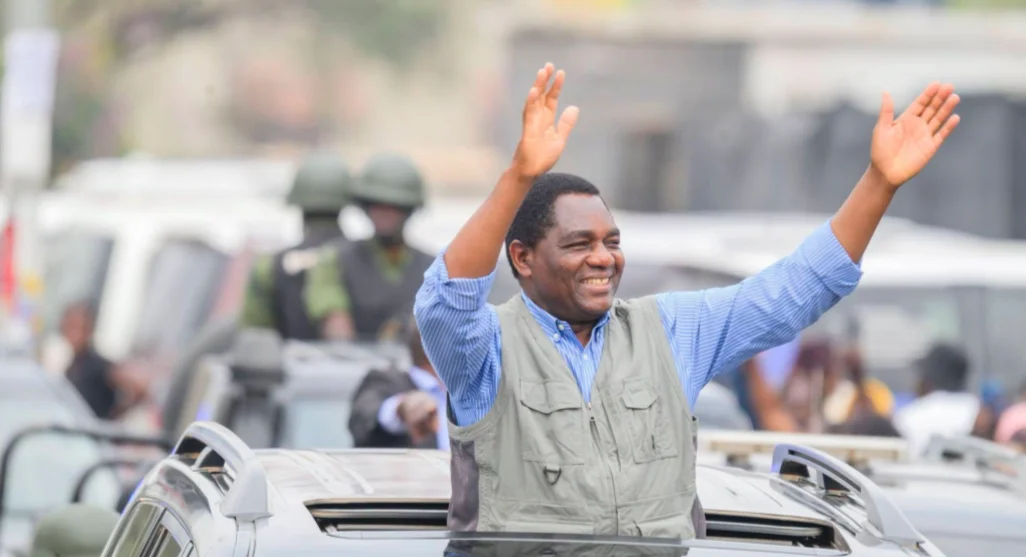
Lusaka, Zambia (Running Africa) — Zambian President Hakainde Hichilema has been sworn in for a second five-year term following his victory in the August 13 presidential election, beginning another term in office amid political tensions, opposition challenges and continued pressure over the cost of living.
Hichilema secured about 60% of the vote, according to official results, defeating opposition leader Brian Mundubile, who received approximately 38%.
Mundubile rejected the result and alleged electoral irregularities, claims that have added to tensions following the vote.
The inauguration comes as Mundubile and his running mate, Makebi Zulu, remain in custody after being charged with treason over allegations that they were involved in plans for an armed uprising. Both men deny the allegations.
Hichilema Begins Second Term as Zambia President
Hichilema’s inauguration formally begins another five-year term at the helm of one of Southern Africa’s most closely watched democracies.
His re-election gives his administration another mandate to pursue economic reforms initiated during his first term while addressing growing concerns over household finances and political divisions.
The president enters his second term with a comfortable official electoral margin but against a significantly more contentious political backdrop.
The opposition has challenged the credibility of the election, while the detention and prosecution of prominent opposition figures have increased scrutiny of the country’s political environment.
Hichilema Wins Zambia Election With About 60%
Official results from Zambia’s August 13 election gave Hichilema about 60% of the vote, compared with approximately 38% for Mundubile.
The result secured Hichilema another five years in office.
Mundubile rejected the outcome, alleging irregularities during the electoral process. The allegations have not overturned the officially declared result.
The political dispute has continued beyond election day, adding to concerns about relations between the government and opposition.
Brian Mundubile and Makebi Zulu Face Treason Charges
Hichilema’s inauguration comes as his main election rival remains in custody.
Mundubile and his running mate, Makebi Zulu, have been charged with treason alongside others over allegations connected to plans for an armed uprising.
Authorities have accused those charged of involvement in activities aimed at challenging the state through force.
Mundubile and Zulu deny the allegations, and the charges do not amount to a finding of guilt.
The case has become a major political issue following the election, with attention increasingly focused on how Zambia’s institutions handle legal proceedings involving senior opposition figures.
Zambia’s Economy Remains Major Test for Hichilema
Beyond the political tensions, the economy is likely to remain one of the defining challenges of Hichilema’s second term.
His first administration focused heavily on stabilizing an economy burdened by high debt, inflation and financial uncertainty.
The government pursued debt restructuring and broader economic reforms aimed at restoring fiscal stability and rebuilding international investor confidence.
Those efforts helped improve Zambia’s standing with creditors and investors, but their impact has not eliminated economic pressure on ordinary households.
Cost of Living Remains Concern for Zambians
For many Zambians, the cost of living remains a central concern despite progress on broader economic reforms.
Prices for essential goods and services continue to shape public perceptions of the government’s economic performance.
Hichilema will therefore face pressure during his second term to translate macroeconomic improvements into tangible gains for households, including stronger employment opportunities, improved incomes and greater affordability.
The challenge will be balancing continued fiscal reforms with growing public expectations for improvements in everyday living conditions.
Zambia’s Democratic Institutions Face Renewed Scrutiny
The aftermath of the 2026 Zambia election is also placing renewed attention on the strength and independence of the country’s democratic institutions.
The opposition’s rejection of the presidential result, combined with the treason proceedings against Mundubile and other defendants, has created a politically sensitive environment at the beginning of Hichilema’s new mandate.
How the government, courts, security agencies and electoral institutions respond to these disputes could influence public confidence in Zambia’s democratic system.
The administration will also face scrutiny over whether political opponents are able to operate freely while legitimate security concerns are addressed through established legal processes.
Hichilema’s Second Term Opens With Economic and Political Challenges
Hichilema begins his second five-year term with Zambia at an important crossroads.
His government can point to progress in debt restructuring and efforts to restore economic credibility, but persistent living-cost pressures mean many Zambians will judge the administration on whether those reforms produce improvements in their daily lives.
At the same time, the disputed election and prosecution of senior opposition figures have placed political governance firmly alongside the economy as a major test of his second term.
With the 2026 election now concluded and Hichilema formally sworn in, attention will turn to whether his administration can ease political tensions, strengthen confidence in Zambia’s democratic institutions and deliver broader economic gains over the next five years.
I can also assess this headline for SEO strength and Google Discover potential.